


Missed tackles and their impact
Good tackle technique varies based on the physical attributes of the tackler, position on the field, carrying style of the attacker or even the time in a match. Team policy should include guidelines for these areas. However basic tackle technique comes down to a few key points, for example:
· Feet close
· Head up
· Wrap
· Squeeze
· Leg Drive
Let’s look at ‘feet close.’ There are many buzz words and phrases that have been used in the past and when properly explained they help players to visualise the correct technique. A personal preference is not to refer to the feet at all and shift focus to ‘chasing hands’ into the tackle. Understanding what this looks like is crucial. The term I use is ’T-Rex.’ It describes the positioning of the hands like the T-Rex dinosaur. It works well with younger players where we can say “be a T-Rex not a Pterodactyl” to illustrate keeping their arms in and up. ‘Chasing’ their hands means don’t extend them but keep them close and follow them into the tackle i.e. not reaching. This brings the tackler close to the attacker (feet close) and prevents them taking a long stride into the tackle, which would reduce leg drive.
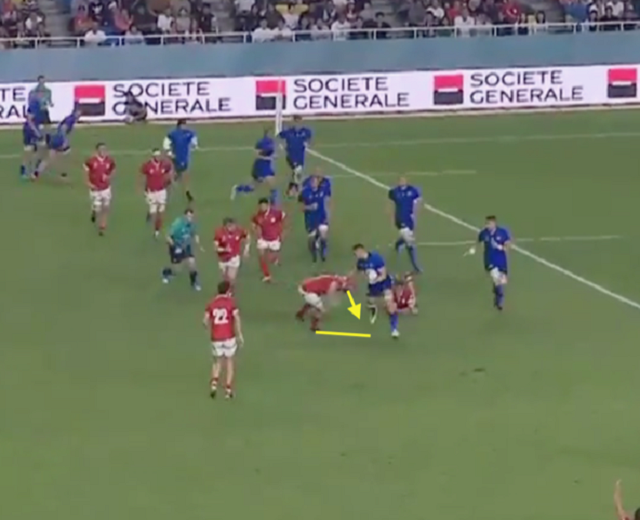
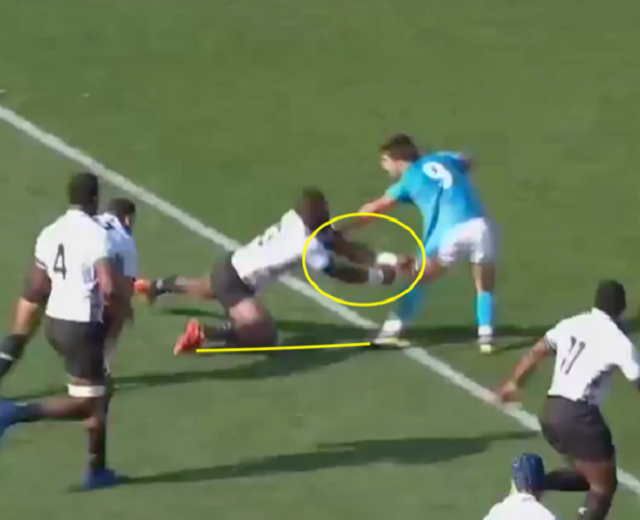
In these images above the tacklers have left their feet behind and are reaching into the tackle.
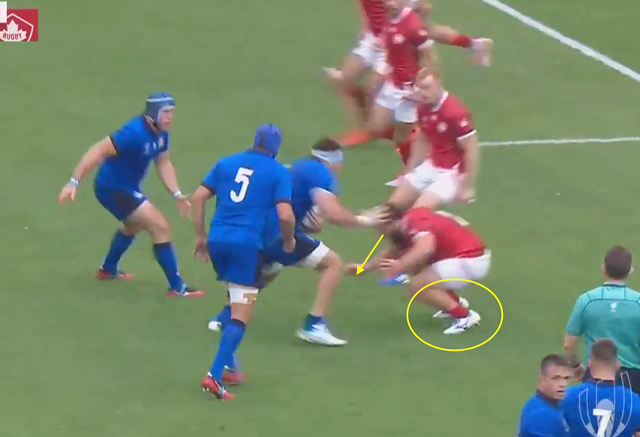
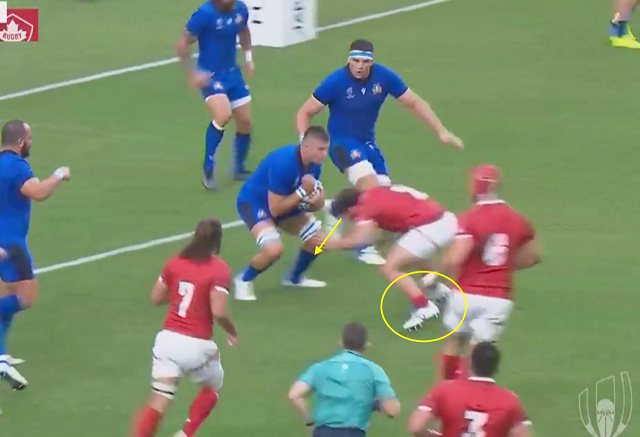
‘Sitting’ in the tackle is common, resulting in a non-dominant tackle – a problem for the defence. A bigger issue arises if the tackler drops his head as seen in these images above. When a tackler loses sight of the tackle target they can be stepped or worse, find themselves in a very vulnerable and unsafe position.
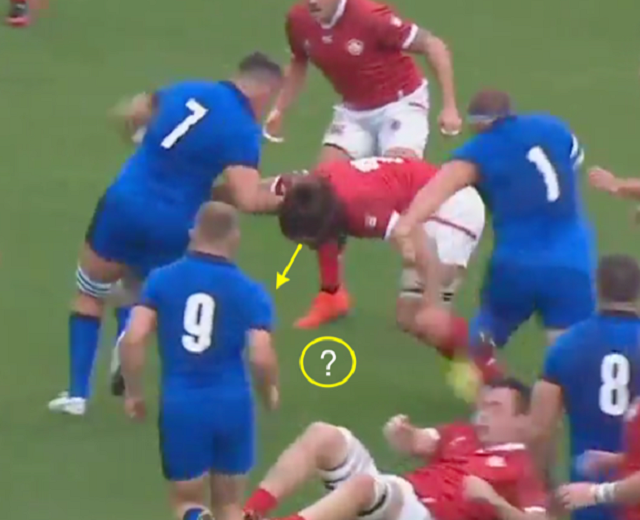
When done well a tackler should be able to chase his hands into the tackle, getting close to the target area. The target area will vary depending on the type of tackle selected i.e. a chop tackle, stack tackle, high, low etc. In all of these it is key to get in close and stay focused on the target area. The tackler gets his power from the ground and his feet need to be under him. Same foot, same shoulder. In the image above we can see the tackler’s head is dropped and his feet are behind him. Watch the associated video clip – you’ll see he hits opposite shoulder to foot, missing his target and de-powering his hit.
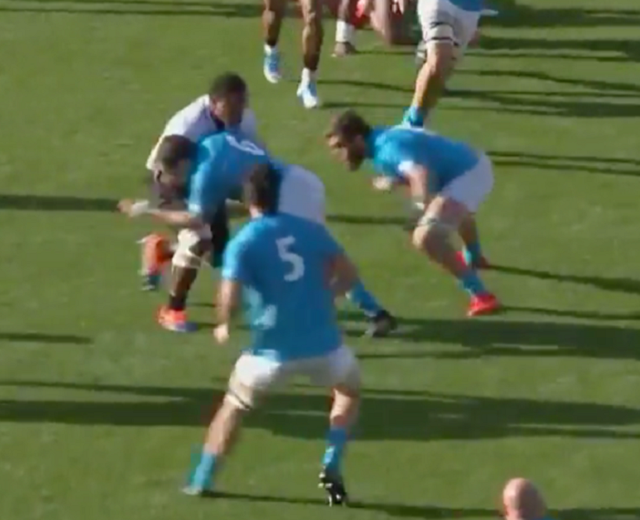
Many teams send two players into the tackle. This is a successful method when both tacklers are aware of their roles: one player high and the other low. The recommended order they do this will differ from coach to coach. In the image above we can see both tacklers are at the same height and end up canceling each other out.
Check out more posts from Dave



Comments