

![How to exploit the ELV on defensive scrum-halves [from scrum] – part 2](https://www.therugbysite.com/rails/active_storage/representations/redirect/eyJfcmFpbHMiOnsiZGF0YSI6MTk3MTYsInB1ciI6ImJsb2JfaWQifX0=--44f369d205c06d1d4f31da1c9450eab483af9641/eyJfcmFpbHMiOnsiZGF0YSI6eyJmb3JtYXQiOiJwbmciLCJyZXNpemUiOiI2NDB4MzYwISJ9LCJwdXIiOiJ2YXJpYXRpb24ifX0=--24387cd063dba25e26cd78d8fc6283a89d192405/TRS%20ELV%202.png)
In this article how-to-exploit-the-elv-on-defensive-scrum-halves, I examined some of the possibilities of launching set moves with the defensive scrum-half now forced to retire behind the mid-line of the scrum. A quick reminder of the new trial law:
“[The #9] must take up a position with both feet no further than the centre line of the tunnel; or permanently retire to a point on the offside line either at that team’s hindmost foot, or permanently retire at least five metres behind the hindmost foot.”
Since then, in the latter half of the Rugby Championship coaching ideas of how best to exploit the new ELV took on a much more concrete form. The scrum became a favourite weapon of attack and the short-side was the red-hot area target zone.
First Argentina scored a try down the short-side of a scrum during their 67-27 rout of Australia in the fourth round:
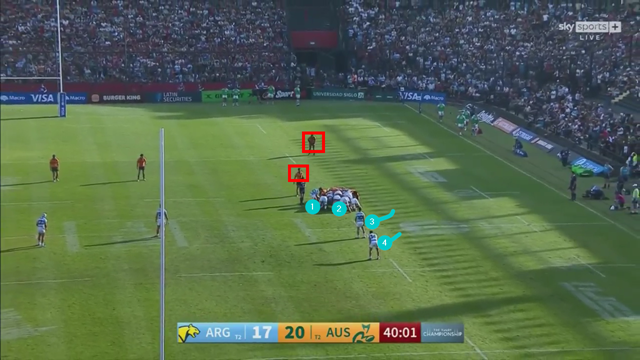
This try is based on the same theory I observed in the previous article. At least four Argentine players [#’s 8, 9, 10 and 14] can move late to the short-side, while the Wallaby scrum-half is defending on the open-side and the wing is set deep in the backfield to cover a kick. With no pressure possible at the base of the set-piece, the Pumas can run the play unimpeded and exploit the overload in the right 15-5m zone.
The Wallabies clearly learned the lesson, and got some of their own back in the final round against New Zealand:
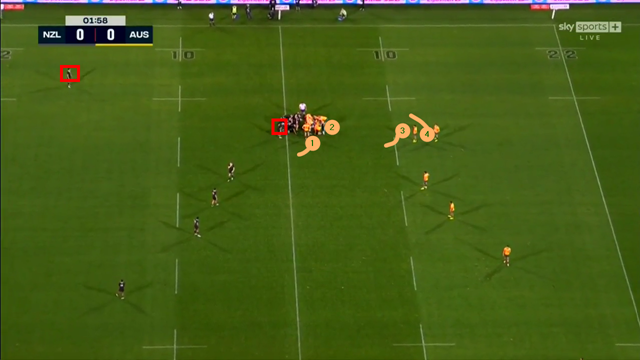
The aim is the same but the formula is slightly different. The formations on both sides of the ball are similar to the Argentine clip, but Australia uses its #9 and #10 to decoy the New Zealand back-row and scrum-half off to the open-side before switching #14 in the opposite direction. The kick-through ought to have resulted in a try for the Wallabies.
Summary
If the ELV on the positioning of scrum-halves at set-piece is passed into permanent law, it will once again open the scrum as an attacking weapon. Less interference at the base means more confidence for the attacking side to run its moves, and late movement will pay out its dividend.



Comments